
Agile
Building Antifragile Relationships and Teams
I’ve presented a number of sessions on building antifragile relationships and teams. This post is a summary of the information from the sessions for anyone who attended (or anyone who is interested) as well links to related articles.
The Responsibility Process, Context, and Safety
The Responsibility Process™ is a practice (some may argue it’s more or less than a practice) that helps us move towards more self-mastery. Being able to facilitate ourselves is all about emotional intelligence – our ability to recognize and react appropriately in the moment to our emotions.

Is Your Training Amazing & Engaging? Or Does it Smell?
I find many things puzzling. One that is puzzling, frustrating, and annoying is how people continue to use outdated methods to train.
Organizational Commitment: Pig & Chicken – Part 2
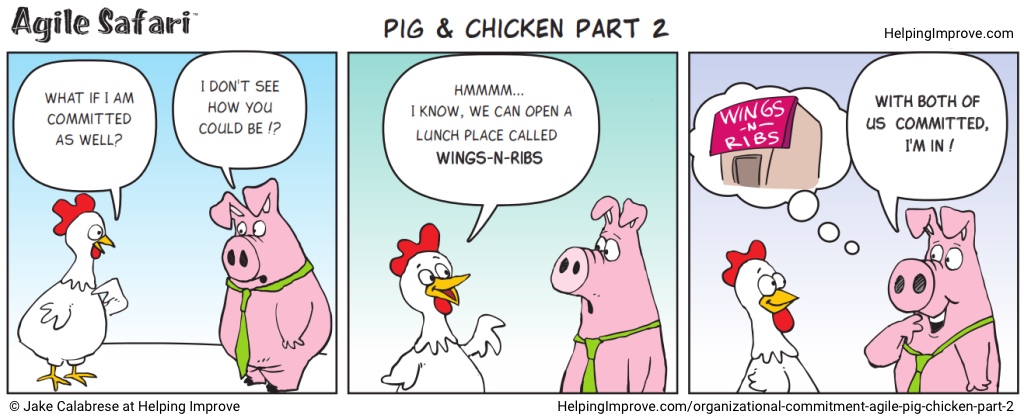
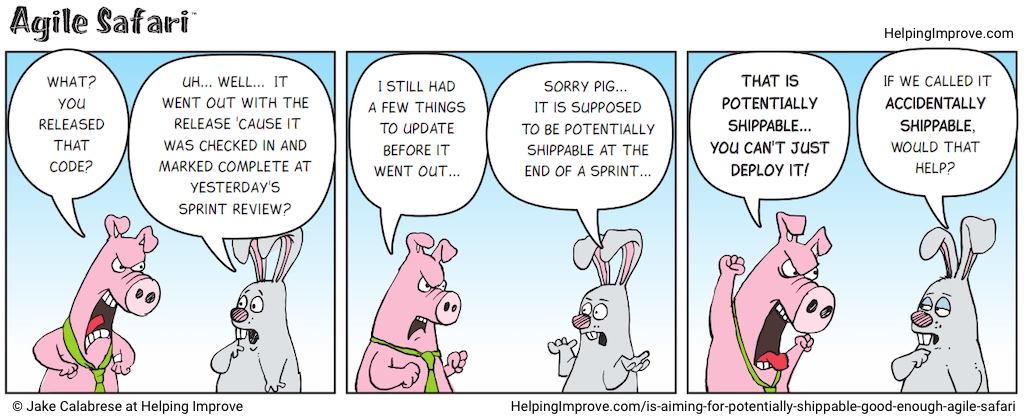
Many people really don’t like the original cartoon (See & read Pig & Chicken part 1). When I decided to do three strips on the Pig & Chicken, I knew there would be a lot of ‘concern’, but based on where I want to go, I made the decision that it had to be done.

Why Project Retrospectives Are Challenging
Project retrospectives are challenging. I spoke a bit about this in lessons learned vs. project retrospectives. You might look at a merger, acquisition, implementation of a new ERP system, or even a major upgrade of an ERP or CRM system. These are non-reoccurring events. A retrospective of this type is quite different from a typical agile retrospective, primarily because on this type of project, people will change and the project will not repeat (the definition of a project is that it is a unique endeavor). At issue here is the fact that if the people will not be the same and the project does not reoccur – then they can’t come up with actions they will apply right away based on what they learned. Ideas for change often just end up in a spreadsheet, a book shelf, or some electronic tool. A big book of “lessons learned” that sits on the shelf gathering dust does not provide much, if any, value.
Agile Commitment — Classic Pig & Chicken (Part 1)
The Pig & Chicken is a cartoon many in the agile community are familiar with. I know some will see it and ask why this one is being rehashed (I know this because I reviewed it with a few people, and they asked). Some will be pretty annoyed since many “strongly dislike” the cartoon (which is fine – please add your comments!). So, for anyone reading this and thinking any of those things, please read on. I want to say, “Don’t worry, I have a plan,” but only you can judge how it pans out for yourself!
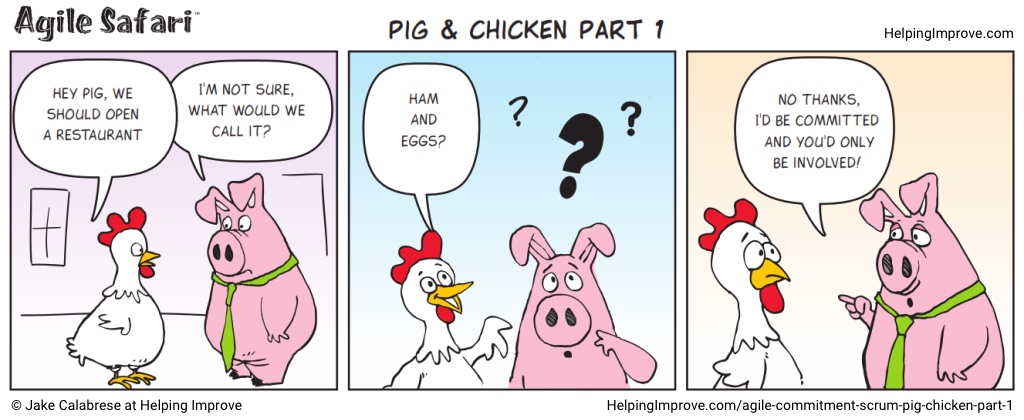
What Is The Pig & Chicken Cartoon?
For readers who are not familiar with agile (or any agile folks who have not seen the cartoon), the ideas is that the pigs are the team (or Scrum Team). The chickens are everyone else.

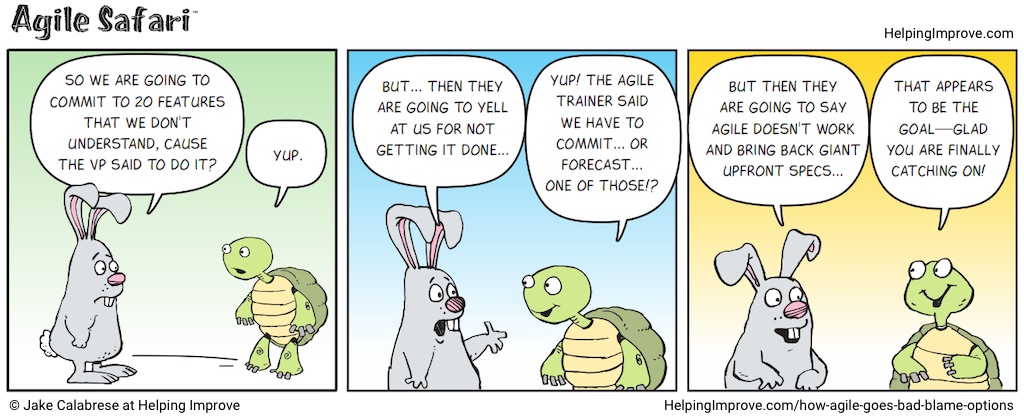
Scrum Commitment or Forecast
I’ve been training, talking, coaching, and writing recently on the topic of commitment and realized that anytime that comes up, it reminds me of the old (seems old – but not really that old!) discussion on commitment or forecast. I still find there are many questions on this topic. It certainly has not been put to bed. The approach I like to take is to step back and ask “what is the real problem?” Is a word stopping you from succeeding or is something else causing the problem? What am I talking about? — I’m talking about when the Scrum Guide was updated to change commit to forecast.