
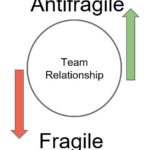
I’ve presented a number of sessions on building antifragile relationships and teams. This post is a summary of the information from the sessions for anyone who attended (or anyone who is interested) as well links to related articles.
Relationships
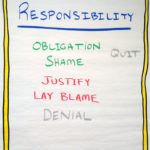
The Responsibility Process, Context, and Safety
The Responsibility Process™ is a practice (some may argue it’s more or less than a practice) that helps us move towards more self-mastery. Being able to facilitate ourselves is all about emotional intelligence – our ability to recognize and react appropriately in the moment to our emotions.

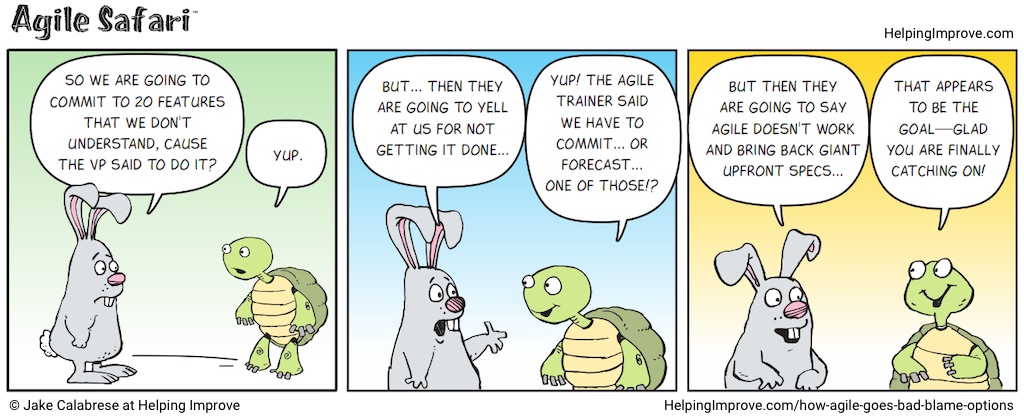
Scrum Commitment or Forecast
I’ve been training, talking, coaching, and writing recently on the topic of commitment and realized that anytime that comes up, it reminds me of the old (seems old – but not really that old!) discussion on commitment or forecast. I still find there are many questions on this topic. It certainly has not been put to bed. The approach I like to take is to step back and ask “what is the real problem?” Is a word stopping you from succeeding or is something else causing the problem? What am I talking about? — I’m talking about when the Scrum Guide was updated to change commit to forecast.

Agile Safari – What’s Not Being Said?
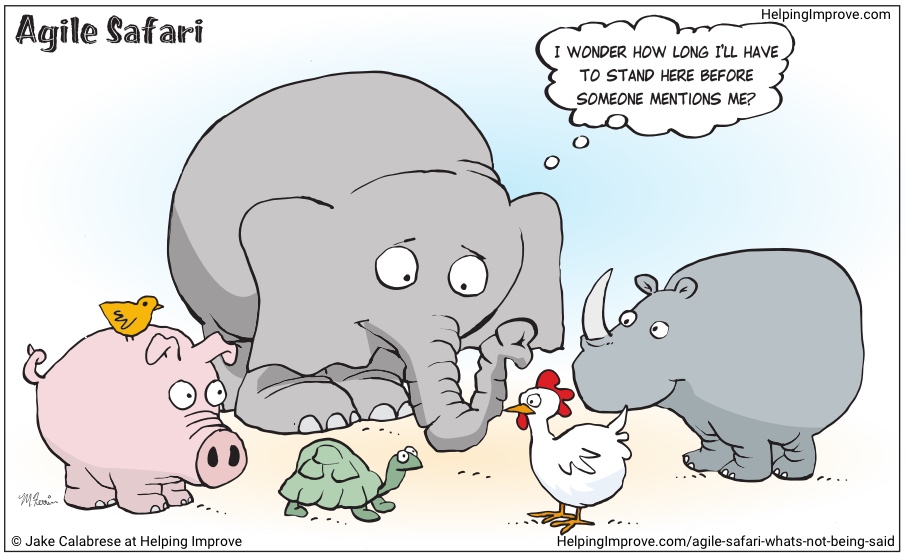
Have you been in a situation where no one would bring up the problem that everyone knew was “in the room?” I’d guess that everyone has been there. So often, we don’t bring up the “elephant in the room.” For anyone who has not heard of this, the elephant in the room is a saying for the real or obvious truth that is not being addressed. Given an elephant in a room would be hard to miss, when people ignore it, they are typically pretending it is not there.
Facilitating with The Focused Conversation
I was presenting Building Antifragile Relationships and Teams at Santa Barbara Agile recently and as we worked on ideas for a conflict protocol, we started discussing the common theme of “facts vs. feelings”. I’ll point out that there was not a hard-line view in the group as to one way or another, but it came up and opened up a nice discussion on the topic.
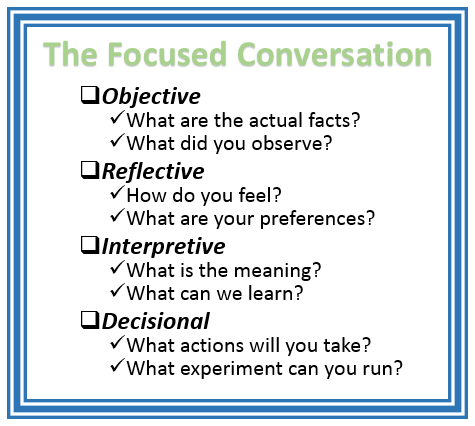
I mentioned The Focused Conversation as a great tool you can use to help structure a conversation. Focused Conversations include four important categories of questions — objective, reflective, interpretive, and decision focused questions. The acronym ORID is sometimes used to describe The Focused Conversation.
The structure also provides a way to hear all of the voices that need to be heard within the group or team. You might even use this as part of an agile retrospective. Using the tool is another way to build antifragile relationships in teams and organizations.

Building Antifragile Relationships and Teams @ Santa Barbara Agile
Building antifragile relationships is about finding ways for our relationships to gain from disorder, or be more antifragile. What tools and practices can we use to help us thrive from disorder? What mindset do we need to hold to be present with the teams and organizations we are in?
I’m excited to be presenting a session at Santa Barbara Agile titled: “Building Antifragile Relationships and Teams.” The session will be on November 19th! You can signup and find specific details at the Santa Barbara Agile Meetup.

Team Toxins and Team Conflict
Team toxins have the ability to wreak havoc on our teams and organizations if left unchecked.
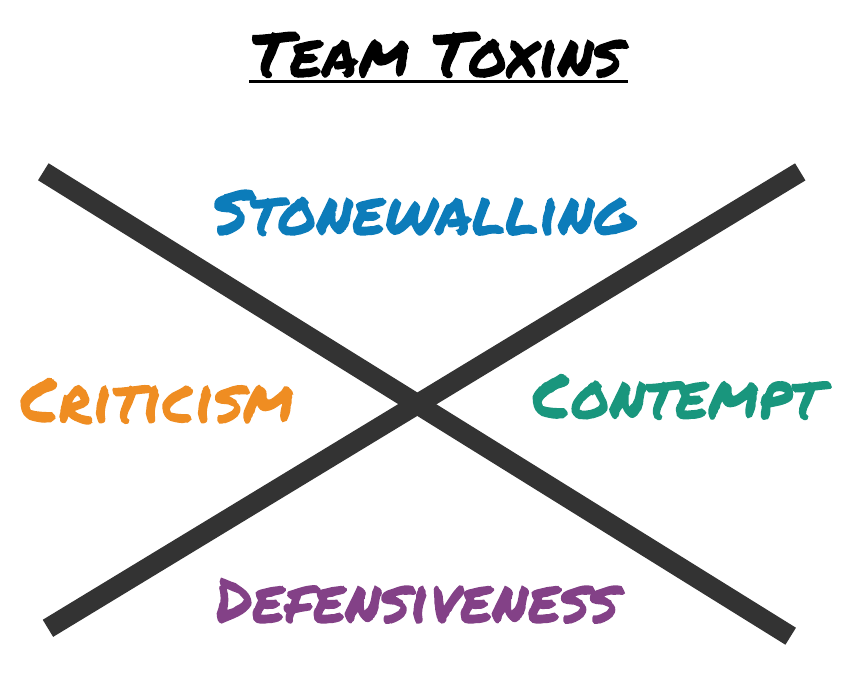
Team toxins can lead to team conflict if people are not aware of and able to deal with toxins. Understanding team toxins is one preemptive way to deal with team conflict.
The four team toxins are:
- Criticism (or Blaming)
- Defensiveness
- Stonewalling
- Contempt

Lessons-Learned vs Project Retrospectives
I wrote about agile team retrospectives in a recent article and find that the term retrospective can be used in many different ways. I’ve heard people ask, “Did you just change the name from lessons-learned to retrospective?” Although there are similarities, there are some key differences. Let’s review a few types and consider the issues with most lessons-learned meeting.
Release and Project Retrospectives
While agile team retrospectives have a team focus on celebrating, learning, and improving their relationship on a regular basis, there are other types of retrospectives.

Agile Retrospectives Improve Team Relationships
I get a lot of questions about agile retrospectives from existing clients who are familiar with agile, those new to it, and folks who don’t use agile (so, yes: everyone!). This is one in a series of posts on retrospectives covering a variety of angles on the subject. [Agile Retrospective Resources has a list of the upcoming articles and many other resources.]
What is an agile retrospective?

An agile retrospective (often simply called a retro) is a regular ritual focused on celebrating, learning, collaborating, committing, and improving the team’s relationship. These items, taken together form the value of an agile retrospective. There are different types of retrospectives (e.g. release and project retrospectives); though here I am focusing here on regularly scheduled team retrospectives (e.g. sprint retrospectives or iteration retrospectives).