

The distinction between managers vs. leaders often sparks lively debates and a flood of opinions. But at its core, this comparison can be misleading. Managers and leaders are not inherently opposing forces or mutually exclusive. Both managers and leaders work within structures, have responsibilities, and are interested in accomplishing goals and meeting the needs of their jobs. In a world that often pits these two against each other, it’s essential to step back and consider the nuances: a manager can be a leader, and a leader doesn’t always need to be a manager. This article explores both, debunks common misconceptions, and explains how these skill sets complement rather than contradict each other.
Management

Self-Organizing Teams vs. Self-Managing Teams
Are self-organizing teams better or the same as self-managing teams? What about self-directing teams? Working with teams can be challenging due to change and complexity. So, the idea that we could have self-organizing teams or self-managing teams can sound valuable, scary, or both!
What do these terms mean, and where can they be confusing? Let’s dig into each one.

The Tiger Team Trap: Why Special Teams Aren’t the Answer (and What to Do Instead)
Have you ever been in a situation where your organization suddenly faces an urgent, high-priority task? If so, you’ve probably heard someone suggest forming a “Tiger Team” to tackle it. It sounds great in theory, right? “A special team of top performers laser-focused on solving the big problem.” But here’s the thing – Tiger Teams often create more problems than they solve. Let’s dive into why this approach can be problematic and explore better alternatives.
What to do when someone asks for an agile checklist or agile metrics checklist?
I hear these requests all the time. “What are the best agile metrics?”, “How can we measure an agile team?” and “I know we can’t just measure agile. . . but, what should be on an “organizational agility checklist?”
There are so many places you can go with these questions and there are even various companies selling ways to measure agile organizations and agile teams. When someone asks me about agility checklists or agile metrics, I tend to start with a few core themes of elements. I use these themes to have conversations with the people who want the measurements and the people who will be measured (before anyone starts using them).

Agile Leadership Myth #3: Leaders & Managers will figure out what their agile role is magically
We have done a huge disservice to leaders and managers, as well as teams. There are plenty of people that will say we don’t need managers and leaders. People can lead themselves. While there is an aspect of this that may be true, there are a lot of steps to get close to that idea.
This article will explore what leaders and managers need to do to succeed as they get started with agile or to help teams move from individuals to a team or even a high-performance team. It builds on Agile Leadership Myth #2: Self-Organizing Teams Don’t Need Any Help.

Agile Leadership Myth #2: Self-Organizing Teams Don’t Need Help.
Self-organizing teams do need help. Self-organizing teams are not instant, automatic, or magically created, despite what is often implied. There is a process to become this type of team, and it is rarely, if ever, a straight line. The help they need differs from more traditional directive assignments and task management.
To unravel this myth, we must look at what self-organizing means, what teams and managers experience, and what you can do to shift your help to a more ROI-friendly approach!

Agile Leadership Myth #1: Telling people “You Are Empowered” Actually Works
A major challenge we run into when helping organizations shift or improve is leadership misconceptions. Agile leadership myths cause a lot of these misconceptions. We need to help avoid falling into the trap of these common myths because they limit our success. A root cause of many of the myths is that people simply don’t know what else to do. For example, Myth #1: ‘telling people “you are empowered” actually works.’ Leaders often don’t know what else to do, other than tell teams they are empowered. We see this with Development Teams, Scrum Teams, Delivery Teams, AND Leadership Teams.
A bit of background — there are many agile leadership myths out there. These myths (or assumptions) limit leaders ability to improve, help others, and succeed. Many myths seem to occur at a nonconscious level, meaning they function like many biases. People are not even aware, consciously, that they are happening.

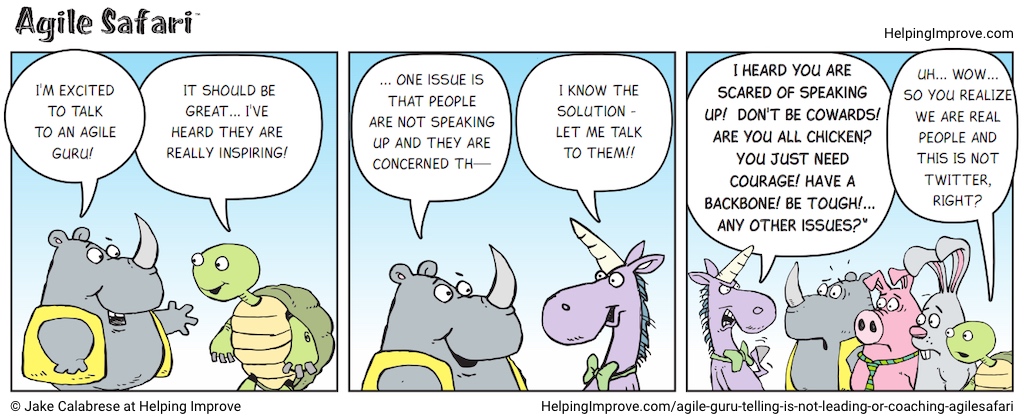
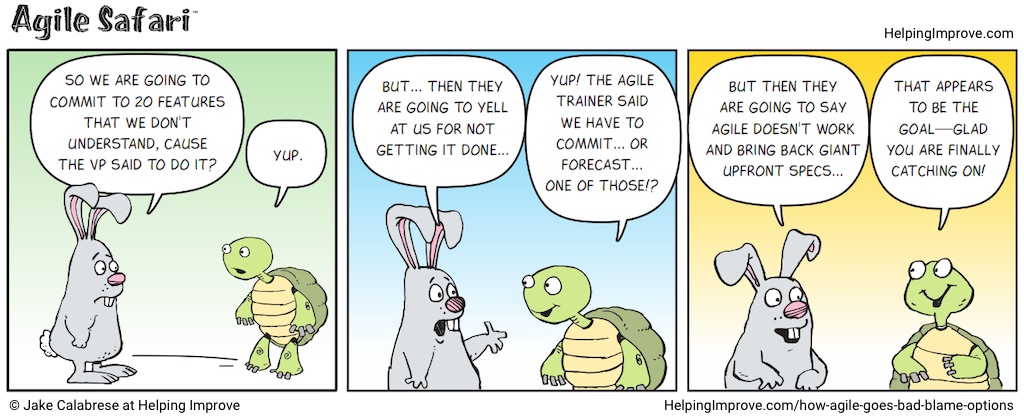

The Responsibility Process, Context, and Safety
The Responsibility Process™ is a practice (some may argue it’s more or less than a practice) that helps us move towards more self-mastery. Being able to facilitate ourselves is all about emotional intelligence – our ability to recognize and react appropriately in the moment to our emotions.